Newsletter Subscribe
Enter your email address below and subscribe to our newsletter

 ByJohn A
Five families can ask for a home temple and mean five different things. One pictures a slim wall shelf in a studio flat. Another wants a carved shrine with its own lighting and room for everyone to sit together during prayers. A temple mandir for home looks its best when the design starts from that reality, not from a photo.
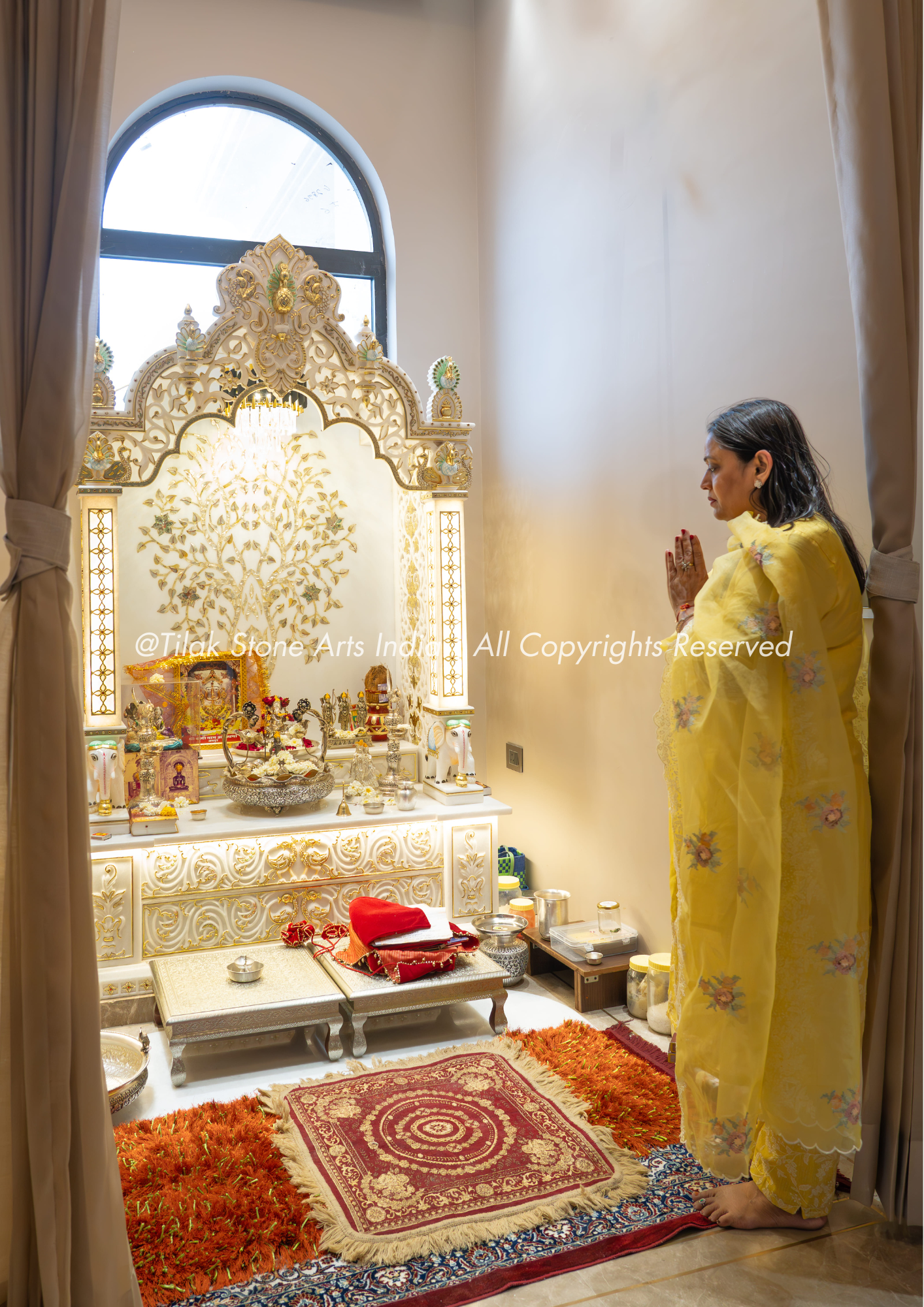
A well-chosen temple mandir for home takes its cue from the room and the way the family prays. That could mean a wall-mounted unit, a compact floor temple, a design with built-in storage or a full statement piece. Handcrafted in white Vietnam marble, any of these can lean traditional or contemporary, depending on how the carving is handled.
Scale Sets the First Impression: The same temple design can feel grand in a spacious bungalow and heavy in a compact flat, because scale changes how the carving reads. Interior style counts too. Mandir designers see this regularly during home visits. A temple that looked perfect in the workshop turns loud against dark wood panelling. Against pale grey walls, the same marble can almost disappear.
Family Traditions Written into the Layout: A family’s worship routine shapes the layout of a home temple more than its style does. The number of idols and family traditions such as a long evening aarti decide the steps and the platform height. Leave those questions until the interiors are finished and the choice shrinks to whatever still fits the wall.
See also: What a Withhold of Adjudication Means After a Plea in Florida
Wall-Mounted Temples for Tight Floor Space: A wall-mounted marble temple saves the most space, since it leaves the floor clear for sitting. It suits studio flats and narrow passages. The catch is weight. Marble needs a solid brick or concrete wall and proper anchoring, never a plasterboard partition, and the smaller shelf limits how many idols fit comfortably.
Compact Floor Temples with Full Detail: A compact floor temple gives a small home a complete shrine, dome and pillars included, in a footprint close to a side table’s. The carving has to shrink with it or the detail turns busy. Sized properly, a compact temple mandir for home fits a bedroom corner and still feels like a proper place of worship.
Storage-Integrated Mandirs That Hide the Clutter: A storage-integrated mandir keeps incense and puja books in drawers beneath the shrine, so the altar itself stays clear. Daily worship collects a surprising amount of small stuff, and none of it looks good on an altar. The base adds height, though, which lifts the idols and suits standing prayer better than seated worship.
Statement Temples for Dedicated Pooja Rooms: A large statement temple suits a dedicated pooja room or a double-height hall, where a tall shikhara and carved pillars can be seen from across the space. It asks for more floor area and more carving time. In a smaller room it is overwhelming. Where the family wants the temple to lead the whole interior, few formats compete.
Pillars and Motifs Set the Tone: Carving depth and motif choice set the tone of a marble temple, from formal and traditional to calm and contemporary. Fluted pillars with a lotus base feel classical. Plain square pillars with a single carved band lean modern. Peacocks and elephants belong in a heritage home, while a lone carved bell suits a minimal room.
Inlay and Lighting That Add Depth: Inlay work brings colour to a white marble temple, while lighting decides how much of the carving shows after dark. Coloured stone inlay can pick out elements of Hindu symbolism, such as Om or a lotus border, in reds and greens. Warm strip lights hidden behind the arch pull shadows into the carving. An overhead spotlight flattens it.
A Range That Covers Both Tastes: Handcrafted marble temples span traditional and contemporary designs, so picking a style no longer means giving up hand carving. At one end sit carved shikhara temples with bell-hung arches. At the other, a slim marble arch frames a single backlit lotus panel. A temple mandir for home from either end can be tailored to the wall it faces.
Natural Marble That Holds Its Value: A handcrafted marble temple is a long-term purchase, since natural marble does not rot or attract termites the way wooden mandirs can. White Vietnam marble stays bright with a soft cloth and mild, non-acidic cleaner. Sized correctly the first time, the temple rarely needs replacing, which makes the upfront choice cheaper over the years.
Matching the Format to the Household: The right temple format depends on the available floor space and on how the family worships, and both can be checked in one visit. A temple mandir for home chosen with these points in mind settles into the room far more naturally. Most of them take only a measuring tape and an honest conversation.
A temple chosen for its space brings a calm, fitting focus to daily prayer. Waiting until the furniture and cladding are in place leaves fewer formats to choose from. Book a design consultation and share a photo of the wall or room, so the right format can be matched before anything is carved.