Newsletter Subscribe
Enter your email address below and subscribe to our newsletter

 ByJohn A
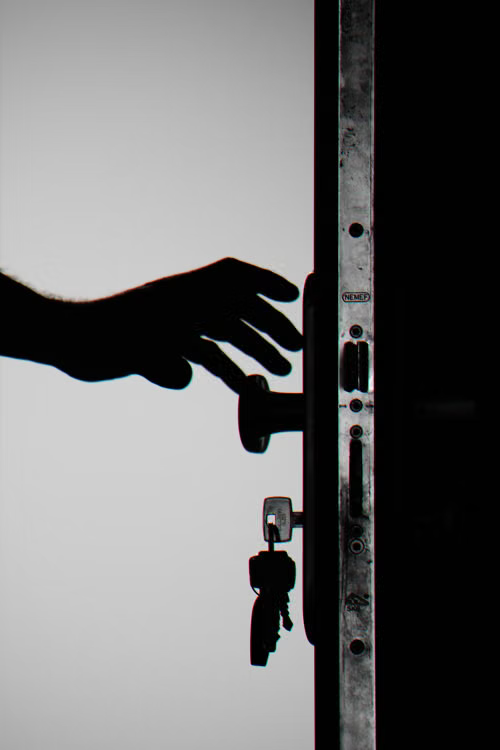
Say you come home to a Capitol Hill rowhouse near Eastern Market and find the back door open a few inches. The police have left, the report has a number, and the house feels quiet in a way that seems slightly off. The door probably still shuts, but you no longer trust it to remain firmly shut. This is usually the moment a DC locksmith steps in to address the issue, and most of the work that follows is slow, careful, and easy to miss.
Here is why that quiet work matters. The Metropolitan Police Department points out that a past burglary is the best predictor of a future one. So a good DC locksmith isn’t just swapping hardware. The real job is finding the weakness someone already used and closing it before anyone comes back to try and break in again.
The first question sounds simple. Did someone force the door, or did they walk right in? FBI figures from 2019 show that 55.7 percent of burglaries involved forcible entry, while 37.8 percent involved no force at all. Each situation calls for a different kind of repair.
When someone forced the door, the damage usually shows where it gave way. A locksmith will check a handful of spots before reaching for any tools.
A house with no damage at all can feel even more unsettling. It usually points to a key, maybe a spare under a planter, a copy held by a former roommate, or a set taken from a car. In that case, the lock itself may be fine. The keys are what need attention.
See also: What a Withhold of Adjudication Means After a Plea in Florida
Rekeying changes the pins inside the cylinder so old keys no longer work. You keep the existing hardware, and the cost is usually lower than a full swap. If keys went missing but the lock came through without a scratch, rekeying is often enough.
Replacement makes more sense when the lock was damaged or weak from the start. MPD advises a strong, well-installed deadbolt on every exterior door and warns that a key-in-the-knob lock alone falls short. Would you want to keep a lock that already failed once? Many people would not. Some owners of older homes still prefer to keep original hardware on a historic door. That is a fair choice too, as long as a sturdy deadbolt sits alongside it.
Lock grades can help you decide. According to PCWorld’s breakdown of the ANSI/BHMA standards, a Grade 1 deadbolt must survive 250,000 open-and-close cycles and ten hammer blows. Grade 2 must handle 150,000 cycles and five blows, and Grade 3 needs 100,000 cycles and two blows. A locksmith can explain which grade suits your door and how often you use it.
In neighborhoods like Bloomingdale and Shaw, many rowhouses have rear doors that open onto an alley. Those doors see less traffic and less attention, which is perhaps why they get tested. After a break-in, it makes sense to give them the same care as the front entrance.
Options a locksmith may bring up include:
MPD also suggests securing doors and windows with pins, locks, and tight-fitting frames. That advice sounds obvious. Still, it is easy to skip the back of the house when the front door feels like the only one that counts.
Once the locksmith packs up, a few habits keep the new hardware working.
The locks may be done in an afternoon. The uneasy feeling could take a little longer, and that is normal. Then again, a door you have tested yourself, fitted with hardware you understand, tends to feel like yours again sooner than you might expect.