Newsletter Subscribe
Enter your email address below and subscribe to our newsletter

 ByJohn A
A single leaking pipe fitting rarely makes the news, but it can stop a process skid, trigger a safety review, and put your name on an incident report. That worry sits behind many purchasing decisions, and it grows when the supplier is on the other side of the world. More US buyers now look at stainless steel pipe fittings manufacturers in India for pricing and product range. Still, fear of a bad batch keeps some from placing that first order.
The upside is that most sourcing risk shows up on paper long before a part reaches your dock. This checklist covers what to ask, what to request, and what to inspect when you compare stainless steel pipe fittings manufacturers in India. It is written for engineers and buyers who want fewer surprises. Perhaps not zero surprises, but fewer.
Some sellers buy parts from several small shops and ship them under one label. That arrangement makes traceability harder. It also makes accountability close to impossible when a part fails in service.
Here is why this question comes first. A trader can quote a good price, but a trader cannot tell you how a tee was forged or who tested it.
Ask each supplier for these details:
A real manufacturer answers these questions without much back-and-forth. If the replies stay vague after two or three emails, that tells you something.
See also: What Is a Seed Phrase in Crypto?
Picture an auditor pulling a tee from a pressure line and asking for its paperwork. If the heat code stamped on the part does not match a mill certificate, that part becomes suspect. It does not matter how clean it looks.
Grade matters too. Type 316 stainless steel contains molybdenum, which gives it better resistance to chloride pitting than 304. Many plants in coastal and chemical service specify it for that reason.
Before you approve a supplier, confirm the following:
Thread mismatch is one of the most common reasons imported fittings end up in a scrap bin. A fitting can pass every pressure test and still leak if the threads don’t match the mating port.
Most US systems use NPT tapered threads. Some hydraulic and aerospace-style ports use SAE/MS straight threads instead. Equipment built for European or Asian markets may call for BSP or ISO threads.
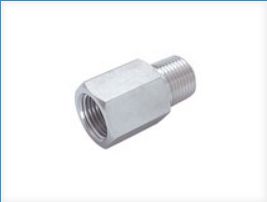
So, list the thread type for every line item on your RFQ. Then ask the supplier to confirm it in writing. Sealexcel produces its stainless pipe fittings with NPT and SAE/MS straight threads, with BSP and ISO options also listed.
Two fittings can look identical in a catalog photo and behave very differently under cyclic pressure. The difference often comes down to how the body was formed.
Straight fittings such as nipples, couplings, and adapters are usually machined from bar stock. Shaped parts like tees, crosses, and elbows are better made from close-grain forgings. Forged bodies tend to have a denser, more uniform grain structure than castings.
Ask your supplier which method they use for each shape. Sealexcel machines its straight fittings from bar stock and makes its tees, crosses, and elbows from close-grain forgings.
Catalog ratings are a starting point, not a final answer. What is the highest pressure spike your system has actually seen? Design pressure and actual operating pressure are not always the same.
Sealexcel lists its stainless pipe fittings at a pressure rating of about 10,000 psig (roughly 690 bar). The listed temperature rating is 800°F (426°C). The size range runs from about 1/8 inch to 1 inch.
Even so, confirm the rating for the exact size and connection you plan to install. A smaller supplier might skip this step. You should not.
This one gets overlooked. A fitting that was perfect at the factory can arrive with dented threads after a long ocean crossing.
Check for these on arrival:
Sealexcel caps exposed threads and packs fittings in sealed clear bags, keeping them clean and undamaged in transit.
Sealexcel manufactures stainless steel pipe fittings in its own facilities in India and supplies buyers in the US and other export markets. You can download the product catalog or send your specifications through the inquiry page.